
Introduction & Context
When disaster strikes, the immediate loss of electricity can transform a familiar environment into an unrecognizable and hazardous landscape. In the darkness of a power outage, wildfire, or building evacuation, your ability to see is not just a matter of convenience—it is a cornerstone of your safety strategy. Many individuals focus extensively on food, water, and first aid, but often overlook the critical importance of reliable emergency light sources. Without proper illumination, even simple tasks like navigating a staircase, administering first aid, or locating essential documents become fraught with the risk of injury. This guide explores the essential types of lighting you should pack in your GoBagCheck kit to ensure you are never left in the dark when it matters most.
Whether you are sheltering in place or forced to evacuate, having multiple, redundant light sources is vital. Darkness increases psychological stress and hampers your ability to make rational decisions. By integrating professional-grade lighting into your preparedness plan, you maintain your mobility and confidence. This article will help you navigate the complex market of lighting gear to find the perfect balance of battery life, durability, and luminosity for your specific needs.
Key Takeaways & Core Concepts
Understanding the technology behind modern lighting is essential for building a resilient kit. Not all lights are created equal, and knowing what to prioritize will save you precious weight and space.
- Hands-Free Versatility: A high-quality headlamp is non-negotiable. It keeps your hands free for carrying children, pets, or vital equipment during an evacuation.
- Battery Chemistry Matters: Lithium-ion batteries offer superior performance, but alkaline batteries are often easier to source in a post-disaster environment. Consider emergency power solutions like solar chargers to maintain your gear.
- Lumen vs. Runtime: More lumens do not always mean a better light. A light that burns for 24 hours at a lower setting is far more valuable than one that blinds you for 30 minutes and then dies.
- Durability Ratings: Look for IPX ratings. An IPX4 rating or higher ensures your light can withstand splashing water, which is critical if you are moving through rain or humid conditions.
- Red Light Mode: Many tactical lights include a red LED setting. This preserves your natural night vision and is less likely to be spotted from a distance, which can be an advantage in certain security scenarios.
Actionable Step-by-Step Guide
1. Assessing Your Lighting Needs
Before purchasing gear, consider your environment. If you live in an urban apartment, a compact, high-intensity flashlight may suffice. If you are in a rural area, you may need a lantern with a wider beam to illuminate a larger space. Always prioritize equipment that is drop-tested and waterproof.
2. Selecting Your Primary and Secondary Gear
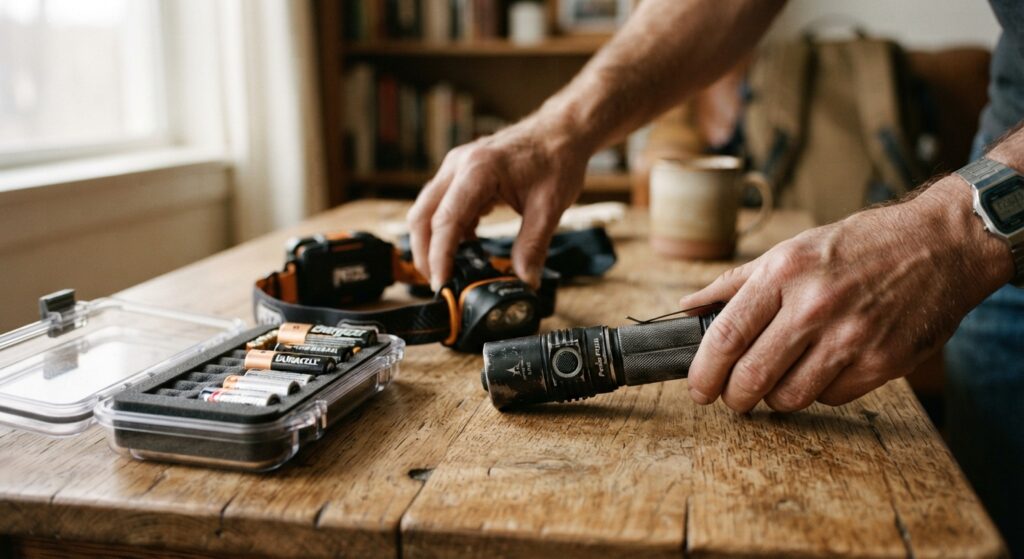
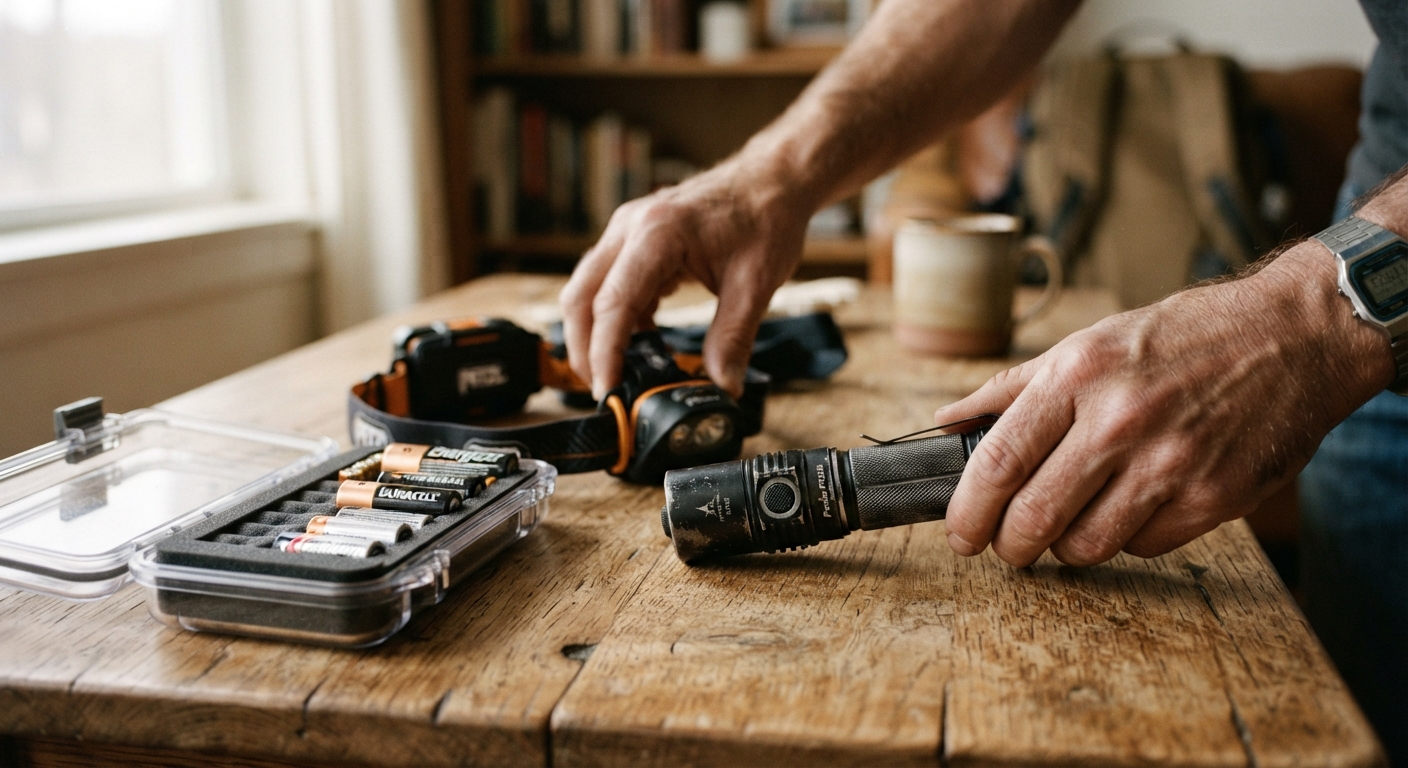
Your primary light should be a reliable LED headlamp. Ensure it has adjustable brightness settings. Your secondary light should be a rugged, handheld flashlight. For tertiary backup, keep a few chemical light sticks (glow sticks) in your kit. While they aren’t as bright, they are completely immune to electronic failure and are excellent for marking locations or paths.
3. Establishing a Power Management Protocol
Store your batteries separately from your lights to prevent accidental activation and battery leakage. Use the official FEMA guidelines for emergency kits to understand the importance of rotating your battery stock every six months. Never rely on a single power source.
4. Common Pitfalls to Avoid
The most common mistake is failing to test gear. Do not wait for an emergency to discover that your batteries are corroded or your bulb is burnt out. Perform a “check-up” every time you rotate your food storage. Additionally, avoid cheap, unbranded lights that lack impact resistance; in an emergency, your gear will be tossed around, dropped, and exposed to the elements.
Frequently Asked Questions
How many lumens do I actually need?
For most indoor tasks, 50-100 lumens is plenty. If you are navigating an outdoor path at night, 200-500 lumens will provide enough visibility to identify hazards on the ground.
Are rechargeable lights better than battery-powered ones?
Rechargeable lights are excellent for long-term use, but they require a power source. We recommend a hybrid approach: a rechargeable headlamp supplemented by a stash of high-quality disposable lithium batteries.
How do I store batteries to prevent leakage?
Always remove batteries from the device if you are storing the kit for more than a few months. Keep them in a cool, dry place inside a plastic, waterproof container.
Why is a red light mode important?
A red light preserves your night vision, meaning your eyes do not have to readjust to the darkness when you turn the light off. It is also significantly less visible to others from a distance.
Conclusion & Summary
Investing in high-quality emergency light sources is one of the most effective ways to improve your safety and peace of mind during a crisis. By combining a hands-free headlamp, a durable handheld flashlight, and a backup supply of fresh batteries, you ensure that you remain capable and mobile, regardless of external conditions. Remember, preparedness is a continuous process. Regularly inspect your equipment, practice using your gear in low-light conditions, and integrate your lighting strategy with your broader emergency go bag checklist. Stay prepared, stay bright, and keep your loved ones safe.
