
Introduction & Context
When an unexpected disaster forces you to leave your home in minutes, the difference between chaos and calm often comes down to emergency go bag organization. Many people invest significant time and money into gathering high-quality survival gear, only to toss it haphazardly into a backpack. This approach is a critical mistake. In a high-stress environment, such as a fire or flood, your adrenaline will spike, and your fine motor skills will diminish. If your bag is a disorganized jumble, you will struggle to find essential items like your medical supplies or emergency light sources when you need them most.
Proper organization is not just about tidiness; it is a tactical necessity. By structuring your bag with a logical layout, you ensure that you can access critical tools by touch alone, even in the dark. This guide explores the principles of weight distribution, modular packing, and accessibility, providing you with a framework to turn your survival kit into a high-performance tool for your family’s safety. Whether you are a seasoned prepper or just starting your journey, mastering how to organize your gear will give you the confidence needed to act decisively during an evacuation.
Key Takeaways & Core Concepts
- Weight Distribution: Always place your heaviest items closest to your back and centered between your shoulder blades. This shifts the center of gravity closer to your body, reducing fatigue during long treks.
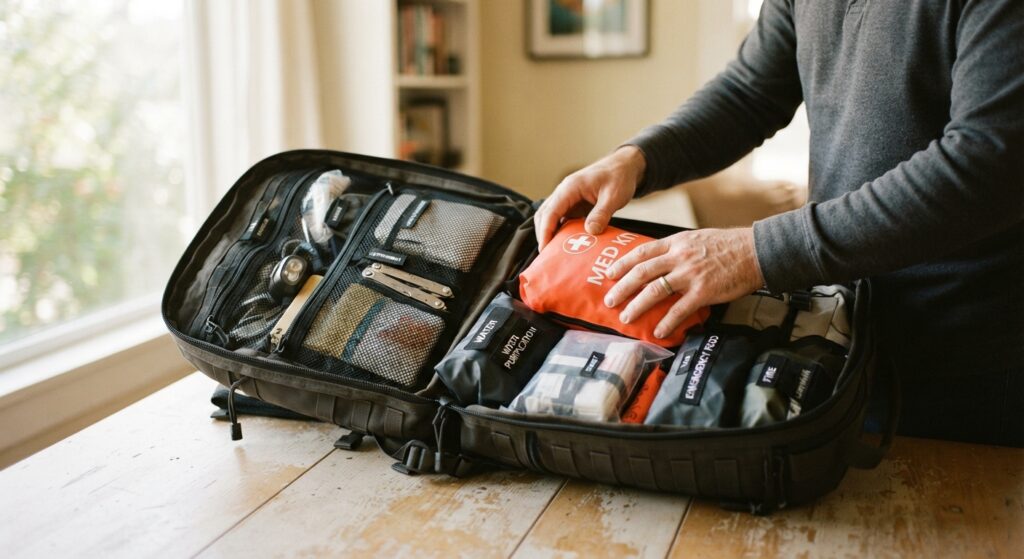
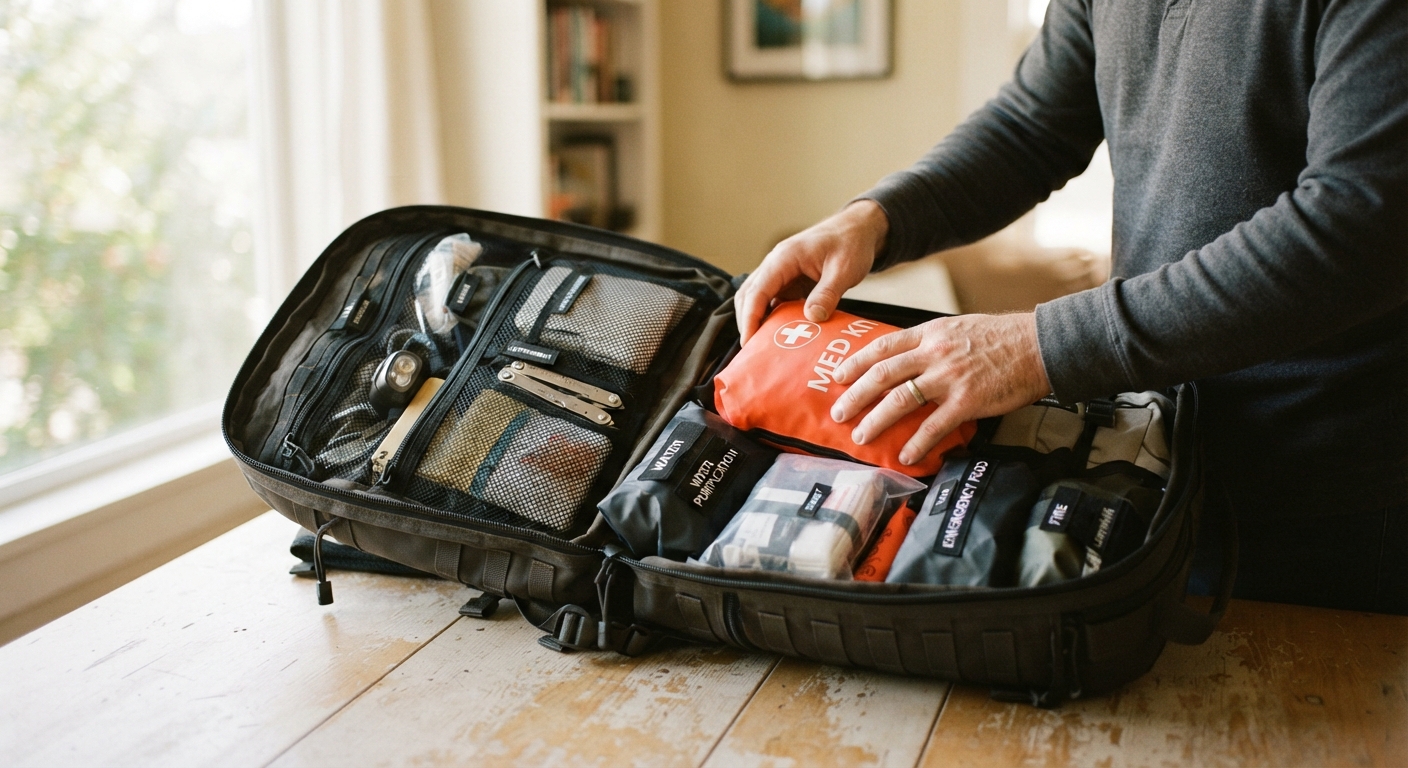
- Modular Packing: Use clear, water-resistant dry bags or packing cubes to group items by category. This prevents gear from shifting and allows you to pull out specific modules without dumping the entire contents of your bag.
- The Rule of Accessibility: Your most critical items—such as your family communication plan, identification, and first aid—must be located in external pockets or the top compartment for instant access.
- Visual Inventory: Use color-coding or labels on your internal pouches to help you identify contents quickly. This is especially helpful if other family members need to assist in retrieving gear during a crisis.
- Standardized Layout: Keep your bag packed the same way every time. Consistency builds muscle memory, which is vital when you are under pressure.
For further reading on how to maintain these systems over time, you can review professional guidelines on emergency kit standards provided by federal agencies.
Actionable Step-by-Step Guide
Phase 1: Categorization
Start by laying out all your gear in a clean, open space. Sort items into functional categories: Nutrition, Hydration, Medical, Light/Power, and Documentation. By grouping items before they go into the bag, you avoid the ‘stuffing’ method that leads to disorganized chaos.
Phase 2: The Modular Approach
Invest in lightweight, durable packing cubes or Ziploc-style dry bags. Label each pouch clearly. For example, keep your water purification tablets and filters in one dedicated cube. This ensures that when you arrive at a water source, you aren’t digging through clothes or spare batteries to find your filtration gear.
Phase 3: Tactical Loading
Load the bag in layers based on frequency of use. Place seldom-used items like spare clothing at the bottom. In the middle, place your food supplies and larger tools. Reserve the top, external pockets for your ‘grab-and-go’ essentials: flashlight, multi-tool, personal documents, and medication. This ensures that if you only have thirty seconds to leave, you can grab the most vital components instantly.
Common Pitfalls to Avoid
One of the most frequent mistakes is overstuffing. A bag that is too heavy to carry comfortably is a liability. If you find your bag exceeds 20% of your body weight, re-evaluate your gear list. Additionally, failing to test your packing system is a recipe for disaster. Practice putting on your fully loaded bag and walking for 30 minutes to check for hotspots or imbalances.
Frequently Asked Questions
How often should I reorganize my go bag?
You should perform a full audit and reorganization at least twice a year. This aligns well with daylight savings time changes, serving as a natural reminder to check expiration dates on food and water.
What should I do if my bag is too full?
Prioritize your needs based on the ‘Rule of Threes’: air, shelter, water, and food. If your bag is bursting, remove non-essential luxury items and focus on the core survival basics that keep you safe during the first 72 hours.
Should I use a backpack or a duffel bag?
A backpack is generally superior for most emergencies because it keeps your hands free, which is critical for navigating debris or helping family members. Ensure it has a supportive hip belt to distribute weight.
How do I keep my documents safe during an evacuation?
Use a waterproof, fireproof document pouch. Place this inside a hard-shell container within your bag to prevent your vital identification and financial records from being crushed or bent.
Conclusion & Summary
Effective emergency go bag organization is the foundation of a successful evacuation. By categorizing your gear, utilizing modular storage solutions, and prioritizing accessibility, you transform a collection of supplies into a streamlined survival system. Remember that your gear is only as useful as your ability to reach it under pressure. By dedicating time to refine your packing strategy today, you are purchasing peace of mind for tomorrow. Regularly practice your deployment, check your inventory, and ensure that every member of your family knows exactly where their essentials are located. Stay prepared, stay organized, and keep your loved ones safe.
