
Introduction & Context
When disaster strikes, the digital tools we rely on daily—our smartphones, GPS devices, and real-time traffic apps—are often the first to fail. Whether due to gridlock, cell tower outages, or battery depletion, technology is not a reliable constant during a crisis. Emergency Go Bag Navigation is the critical skill set that ensures you can reach your destination regardless of the state of the local infrastructure. By learning to rely on traditional tools like physical maps and magnetic compasses, you transform from a passive traveler into an active navigator capable of making informed decisions under pressure. This guide is designed for anyone who wants to ensure their GoBagCheck strategy includes the ability to traverse terrain safely when standard routes are blocked or digital signals are lost. Mastering these skills is not just about finding a path; it is about maintaining your independence and safety when the world around you becomes unpredictable.
Key Takeaways & Core Concepts
- The Failure of Digital Dependence: Relying solely on GPS is a vulnerability. Learn why traditional methods are the gold standard for Emergency Evacuation Routes.
- The Analog Toolkit: A proper navigation kit should include a reliable baseplate compass, topographic maps of your local area, and a waterproof storage case.
- Spatial Awareness: Understanding how to relate the lines on a map to the physical landscape around you is the foundation of effective navigation.
- Triangulation Basics: Learn the core concept of identifying your position by using two or more known landmarks when you are unsure of your exact location.
- Pacing and Dead Reckoning: These are essential techniques for estimating distance traveled in low-visibility conditions or dense terrain.
Understanding these concepts requires moving beyond the ‘point-and-click’ mindset of modern navigation. You must understand that a map is a two-dimensional representation of a three-dimensional world, and a compass is a tool that requires calibration to the specific environment. According to the National Park Service, basic map and compass proficiency is a fundamental skill for anyone venturing into unfamiliar or rugged terrain, a principle that applies equally to urban emergency evacuations.
Actionable Step-by-Step Guide
Step 1: Acquire and Protect Your Maps
Begin by purchasing high-quality topographic maps of your primary evacuation zones. Unlike digital maps, paper maps do not run out of battery. Ensure these are stored in a waterproof bag to prevent degradation. It is helpful to mark your primary and secondary routes in permanent ink so they are easily identifiable in a high-stress scenario.
Step 2: Master Your Compass
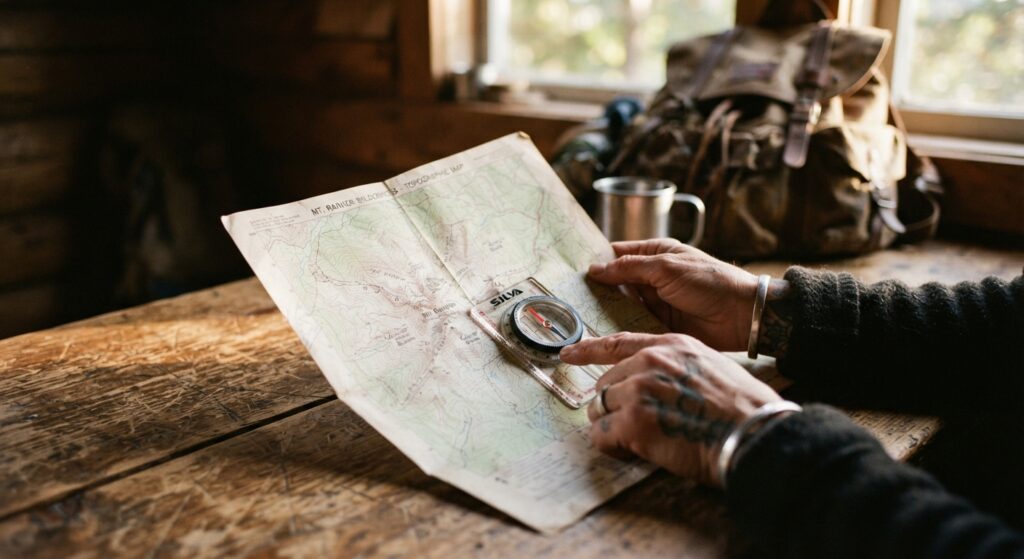
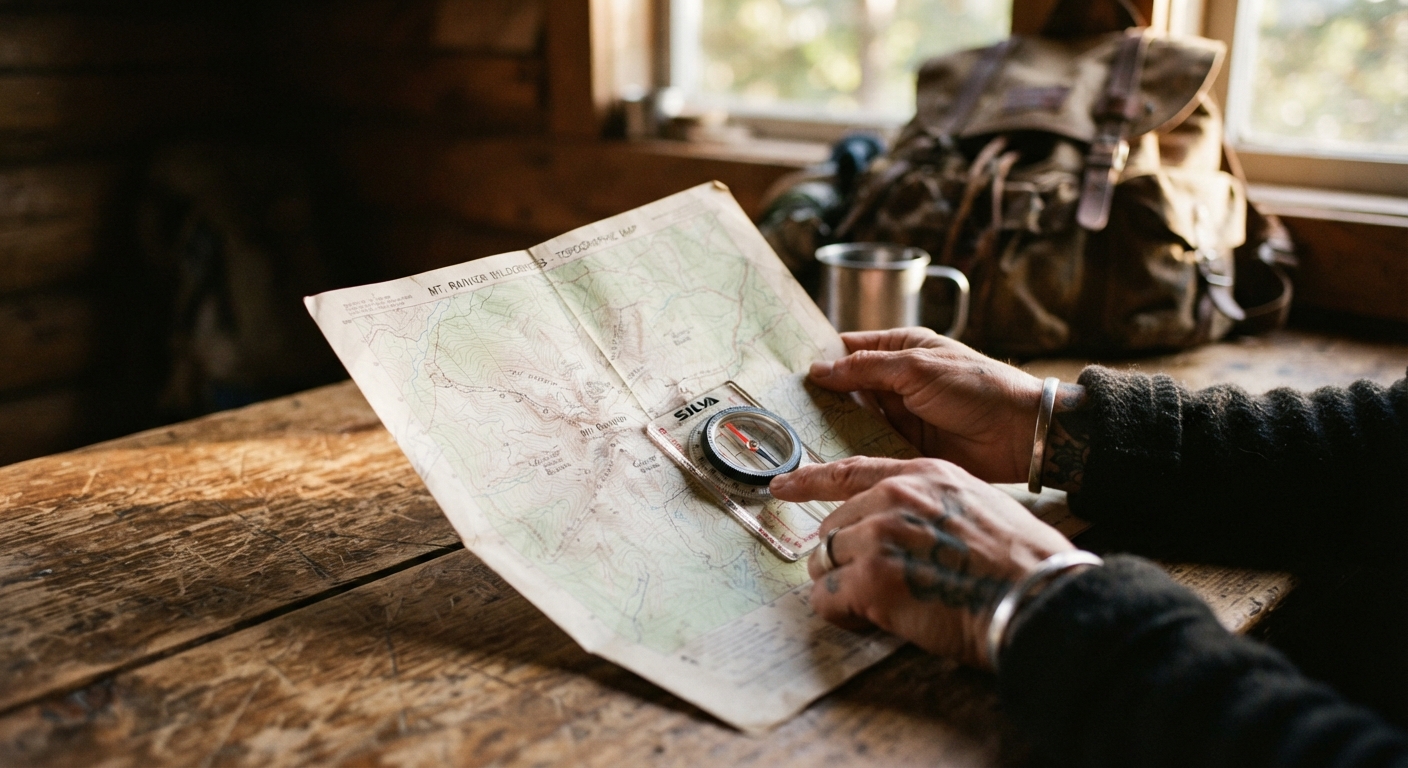
A baseplate compass is essential for Emergency Go Bag Navigation. Learn how to ‘orient the map’ by aligning the map’s north with the compass needle. Practice taking a bearing—the direction you need to travel—by pointing the direction-of-travel arrow toward your objective and rotating the bezel until the ‘orienting lines’ align with the magnetic needle.
Step 3: Practice in Low-Stress Environments
Do not wait for a disaster to test your skills. Spend a weekend hiking in a local park using only your map and compass. Compare your findings with a GPS app to verify your accuracy. This ‘rehearsal’ helps build the muscle memory required to stay calm when it matters most.
Step 4: Common Pitfalls to Avoid
One common mistake is ignoring ‘declination,’ the difference between true north and magnetic north. Ensure your compass is adjusted for your specific geographic location. Another pitfall is failing to account for terrain obstacles; a straight line on a map might lead you into a swamp or a cliff. Always plan your routes based on physical terrain features like ridgelines or roads.
For further reading on how to prepare your physical kit, you may also want to review our guide on Emergency Go Bag Organization to ensure your tools are accessible.
Frequently Asked Questions
Why do I need a physical map if I have a GPS?
GPS signals can be blocked by terrain, weather, or infrastructure failure. Physical maps provide a permanent, battery-free reference that functions under any condition, making them a vital backup for disaster survival.
What is the most important feature of a compass?
Look for a baseplate compass that includes an adjustable declination scale and a clear, readable dial. It should be durable and liquid-filled to dampen the needle’s movement, ensuring stable readings.
How often should I update my maps?
You should review your maps annually. Urban landscapes change, and new construction or road closures can render old maps inaccurate. Ensure your printed materials reflect the most current state of your evacuation routes.
Can I use my smartphone as a backup?
Yes, but treat it as a secondary tool. Ensure you have offline maps downloaded and a portable power bank, as discussed in our guide on Emergency Power Solutions, to keep it operational.
Conclusion & Summary
Emergency Go Bag Navigation is a fundamental pillar of personal and family preparedness. By stepping away from digital reliance and mastering the art of map and compass reading, you equip yourself with the ability to navigate through chaos. From selecting the right topographic maps to practicing bearing calculations, these skills provide the confidence needed to move your loved ones to safety. Remember, the best survival gear is useless if you cannot find your way to your destination. Start by assembling your navigation kit today, practice in your local area, and ensure that your evacuation routes are clearly marked and understood by your entire family. Stay prepared, stay calm, and keep your loved ones safe.
