
Introduction & Context
When disaster strikes, the immediate instinct is to secure our own safety and the safety of our human family members. However, for millions of households, pets are not just animals—they are beloved family members who rely entirely on us for their survival. Emergency Go Bag Pet Preparedness is a critical, often overlooked aspect of disaster readiness that ensures your pets are not left behind or vulnerable when the unexpected happens. Whether you are facing a sudden wildfire, a flood, or a grid-down emergency, having a dedicated kit for your animal companions can mean the difference between life and death. Many official emergency shelters have strict policies regarding pets, meaning you must be entirely self-sufficient in your care. By integrating your pet’s needs into your overall emergency go bag strategy, you provide a sense of security for your animals and peace of mind for yourself. This guide explores the essential components of pet-centric survival, ensuring that when you move to safety, your pets remain healthy, calm, and protected throughout the ordeal.
Key Takeaways & Core Concepts
- Nutritional Stability: Always pack at least 3-7 days of your pet’s regular food and water. Sudden changes in diet during a high-stress event can lead to severe gastrointestinal distress in animals.
- Medical Continuity: Just as humans need medication management, pets require a portable health file, including vaccination records and a supply of any daily maintenance medications.
- Identification and Security: In the chaos of an evacuation, pets can easily become separated from their owners. Ensure your pet has a collar with current contact information and consider microchipping as a permanent backup.
- Comfort and Calming: Sensory overload is as real for pets as it is for humans. Including a familiar blanket or a favorite toy can help manage your pet’s anxiety during a crisis.
- Sanitation Essentials: Pack collapsible waste bags and cleaning supplies. Maintaining hygiene for your pet is essential for preventing the spread of disease in confined evacuation spaces.
Understanding these core concepts is vital for comprehensive sensory preparedness and long-term survival. For additional guidance on animal health and safety during disasters, consult resources provided by the Humane Society of the United States regarding disaster planning for animals.
Actionable Step-by-Step Guide
Phase 1: Inventory and Packing
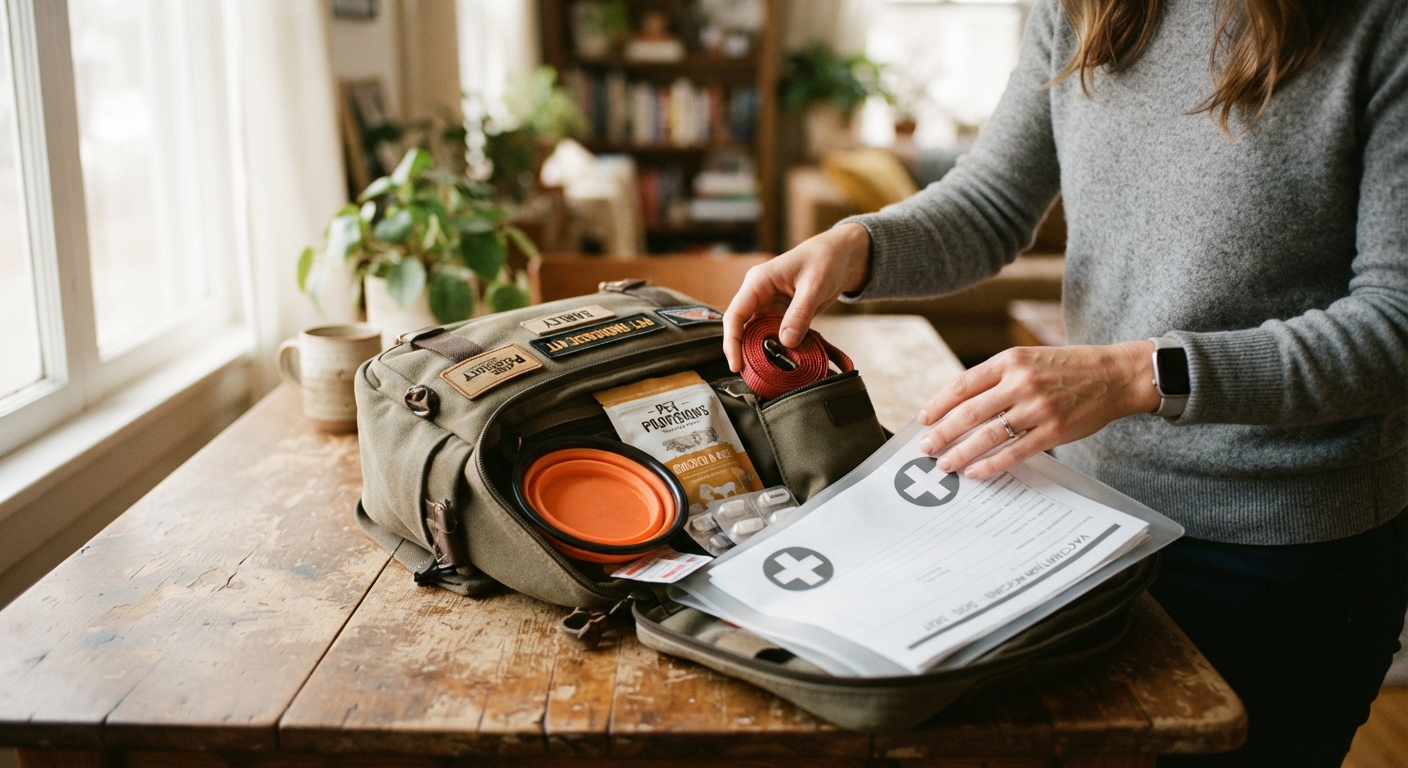
Begin by selecting a durable, waterproof backpack specifically for your pet’s gear. Include a collapsible food and water bowl, a leash, and a secure carrier or crate. Ensure you have a current photograph of your pet in case you become separated, which is a common occurrence during chaotic evacuations. Store these items in a place that is easily accessible.
Phase 2: Health and Documentation
Create a waterproof pouch for your pet’s vital records. This should include proof of ownership, recent vaccination records, and a list of specific dietary requirements or allergies. If your pet takes daily medication, keep a two-week supply in a rotating stash to ensure nothing is expired when you finally need it.
Phase 3: Training and Familiarization
Do not wait for a disaster to test your equipment. Practice putting your pet into their carrier or crate regularly. If your pet is not used to being handled or contained, they will likely become highly stressed during an actual emergency. For more insights on handling high-stress situations, review our guide on psychological resilience. Remember that consistent exposure to their ‘go bag’ gear will make the eventual evacuation process smoother and less traumatic for both of you.
Common Pitfalls to Avoid
The most common mistake is failing to account for the pet’s reaction to loud noises or crowds. Ensure your leash is heavy-duty and that your pet is comfortable wearing a harness. Never assume that a pet will act ‘normally’ under extreme environmental stress; always prioritize containment and safety.
Frequently Asked Questions
What if my pet has special dietary needs?
If your pet requires a prescription diet, you must keep a rotating stock of that specific food in your go bag. Always consult with your veterinarian about the best way to store these items for long-term survival scenarios.
How do I keep my pet calm during an evacuation?
Familiar scents are key. Including a piece of your own clothing or a well-loved blanket from your home can provide significant comfort. You may also discuss with your vet the use of natural calming pheromones or anxiety-reducing supplements.
Should I pack extra water for my pet?
Yes, absolutely. Pets require as much, if not more, hydration than humans during high-stress activities. A good rule of thumb is to calculate one gallon per day for large dogs, alongside your human water rations.
What if I am forced to leave my pet behind?
This is a worst-case scenario. If evacuation is mandatory and you cannot take your pet, ensure they are in a secure, interior room with plenty of food and water, and leave a note on your door for rescue personnel. However, proactive planning minimizes the likelihood of this tragic outcome.
Conclusion & Summary
Emergency Go Bag Pet Preparedness is not merely an optional task; it is a fundamental responsibility for every pet owner. By planning ahead, gathering the right supplies, and practicing your evacuation routine, you ensure that your animal companions are not left vulnerable when the unexpected occurs. Remember that your pets rely on your leadership and preparation to navigate the chaos of a disaster. Start building your pet’s kit today, and integrate it into your family’s broader group preparedness plan. Being prepared for your pet is, in effect, being prepared for your entire family unit, fostering resilience and safety in the face of any crisis.